22% Strength Improvement for South Korean Football Player in 4 Months
by Ivan Escott
Mar 31, 2026
•6 minutes

INTRODUCTION
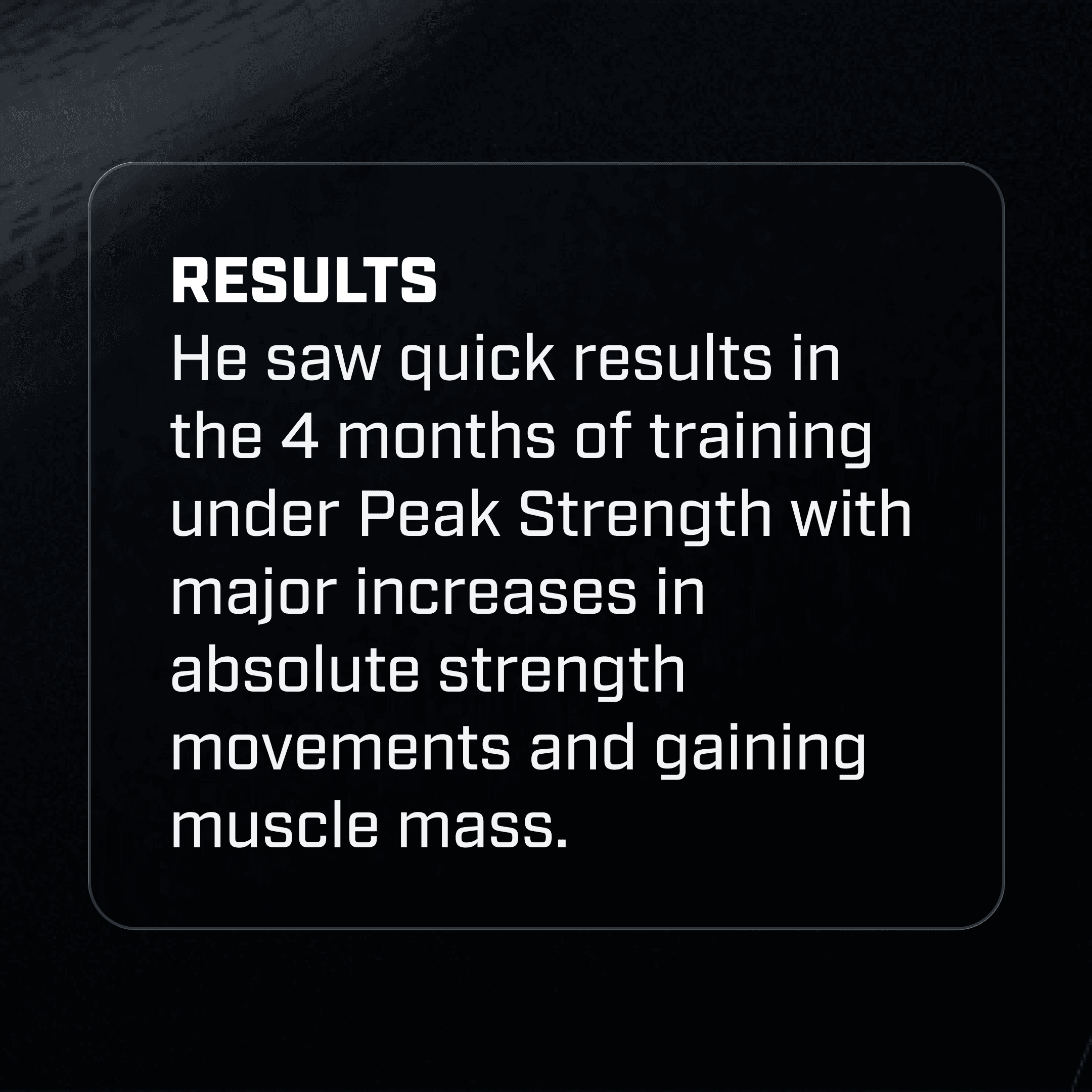
This case study examines the progress of a 24-year-old male football player that used Peak Strength to get stronger, faster, and more athletic. This athlete’s goal was to become more explosive and put on muscle mass as he trained as an exchange student in the United States. The program, consisting of 5 days a week of training, was designed to improve overall strength, explosiveness, and build muscle mass.
Key results from the program include:
Strength
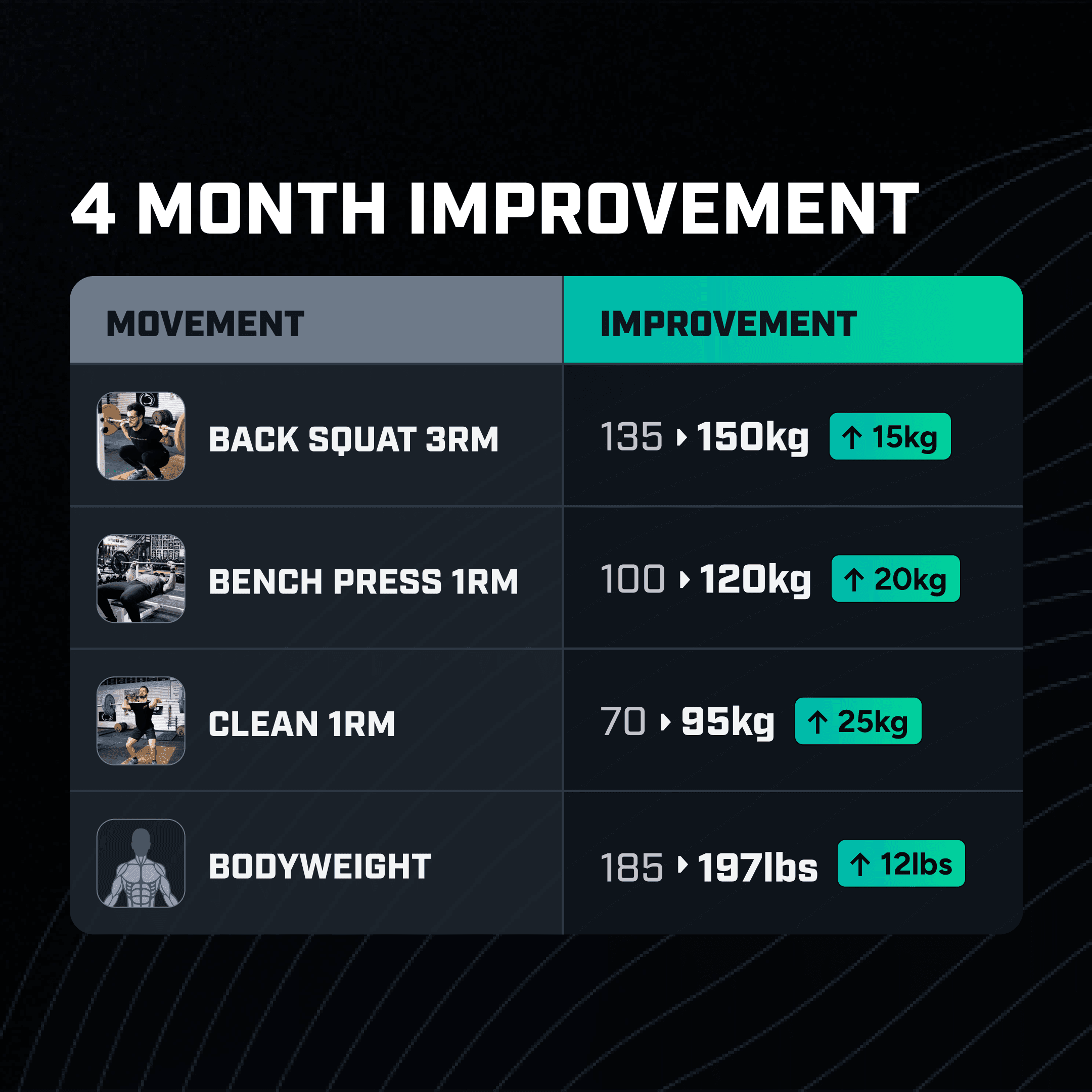
Back Squat (3RM): Increased from 135 kg to 150 kg (+15 kg)
Bench Press: Increased from 100 kg to 120 kg (+20 kg)
Explosiveness
Clean: Increased from 70 kg to 95 kg (+25 kg)
Bodyweight
Bodyweight: Increased from 185lbs to 197lbs (+12 lbs)
Over 4 months of using the tight end training plan in Peak Strength, the athlete improved in all three primary physical focuses of strength, explosiveness, and hypertrophy. This case study provides a detailed analysis of the athlete’s training program, methodology, and outcomes, demonstrating the effectiveness of following a structured strength training plan for collegiate age athletes looking to compete at the next level.
ATHLETE PROFILE

Name: Dennis (Daehyeon) Seong
Sport/Position: Football/Tight End
Training Duration: 4 Months
Frequency: 5 days per week
Total Tonnage: 655,000 +lbs
TRAINING FOCUS
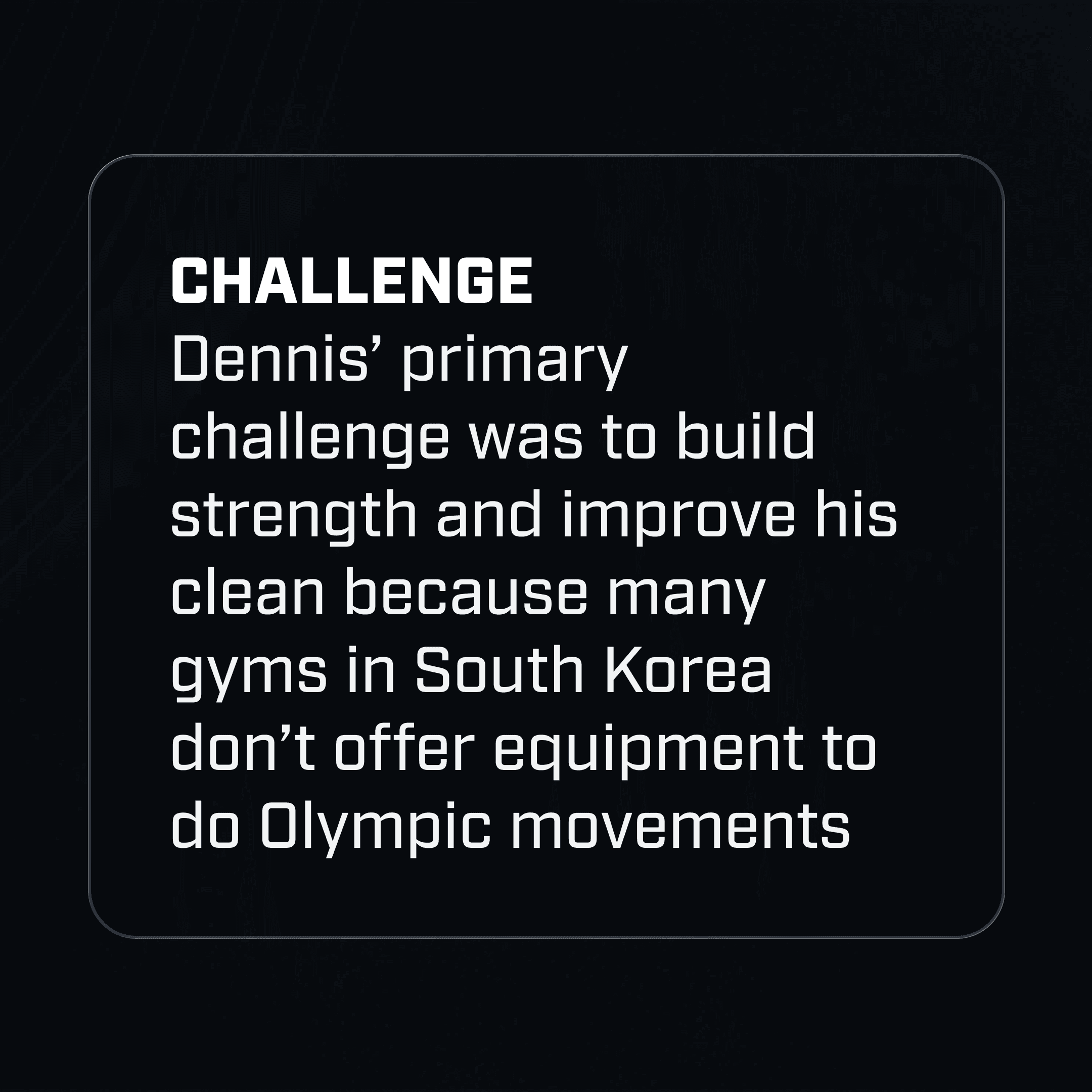
Dennis’ primary goals were to:
Increase explosiveness for better performance as a tight end.
Improve absolute strength to support the demands of his sport.
Put on weight and muscle mass after coming back from a minor injury.
METHODOLOGY
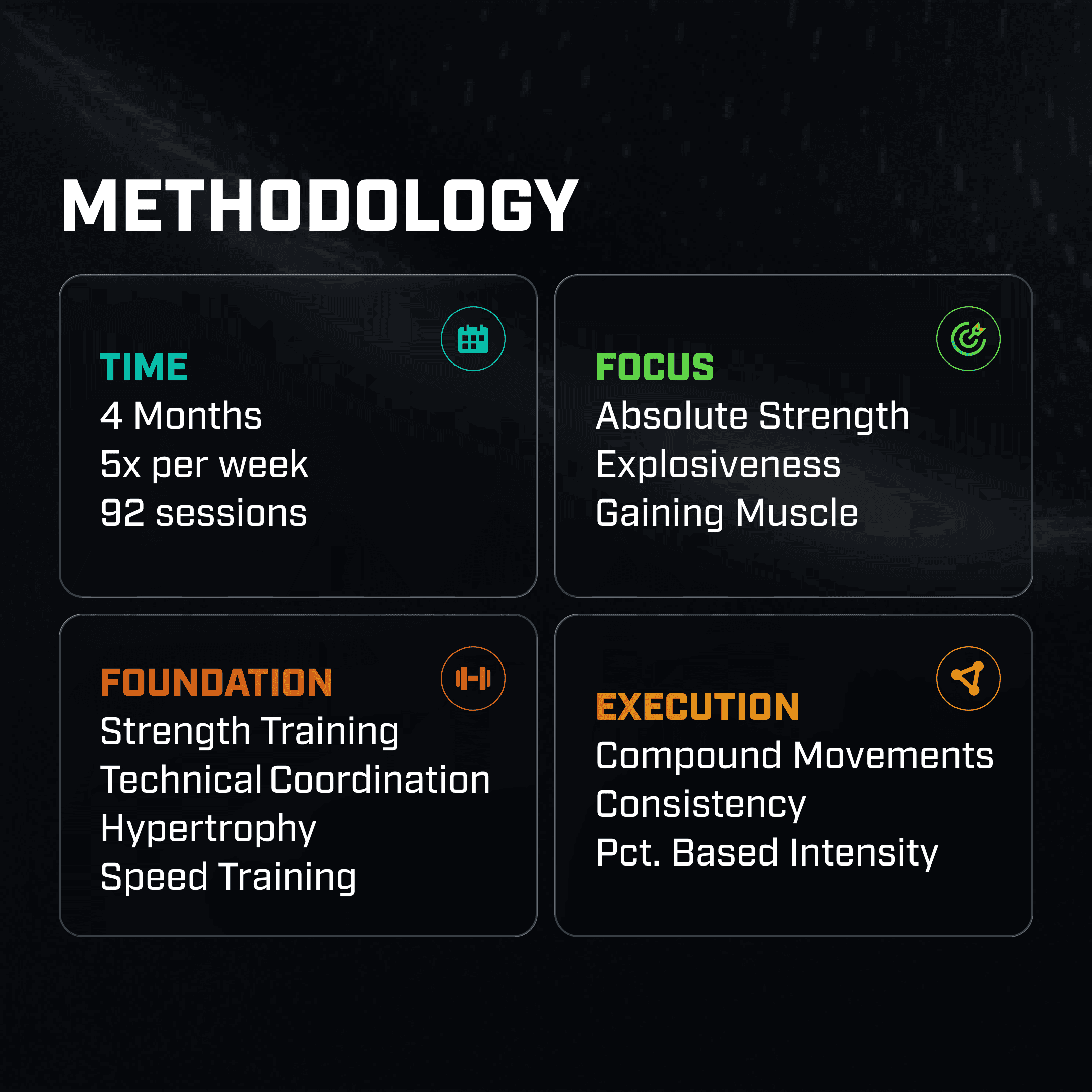
Dennis followed a comprehensive, tight end-specific training plan designed to enhance absolute strength, explosiveness, and build muscle mass. The program integrated key elements of strength training, Olympic weightlifting, hypertrophy, and speed training. Each training week included the following components:
Strength Training: Emphasis on squat variations, bench press, and upper body hypertrophy.
Technical Coordination: Dynamic Olympic weightlifting movements such as cleans to develop coordination and train fast twitch muscle fibers.
Plyometrics: Drills designed to improve movement patterns, force application, and explosiveness.
Accessory Work: Core strengthening exercises, mobility drills, and isolation exercises for hypertrophy.
TRAINING PROGRESS AND RESULTS
Absolute Strength
Back Squat (3RM):
Starting Point: 135kg
End Point: 150kg
Improvement: +15kg (11%)
Analysis: Over four months, Dennis saw an 11% improvement in maximal lower-body strength. A 15kg gain at near-maximal intensity reflects strong neural adaptation, improved motor unit recruitment, and more efficient force production. On the field, this translates to greater displacement during drive blocks, improved short-area acceleration off the line, and enhanced stability through contact. Structured progressive overload and movement specificity allowed rapid strength gains that directly support explosive, high-contact performance.
Bench Press
Starting Point: 100kg
End Point: 120kg
Improvement: 20kg (20%)
Analysis: For a tight end, this 20% increase in bench press strength translates directly to stronger hand placement for blocking responsibilities. It also enhances upper-body durability in high-contact situations and supports ball security by improving arm and shoulder strength through contact. Dennis even states that he saw a difference in size and power since starting the Peak Strength tight end program.
Explosiveness
Clean
Starting Point: 70kg
End Point: 95kg
Improvement: +25kg (35.7%)
Analysis: A 25kg jump in the clean reflects major improvements in rate of force development, triple-extension mechanics, and neuromuscular coordination. Unlike absolute strength lifts, the clean demands rapid hip extension, precise timing, and efficient force transfer from the ground through the torso to the bar. For a tight end, this directly enhances first-step explosiveness, vertical power, and short-area burst. Greater clean strength improves his ability to accelerate off the line, separate in tight windows, and generate force during contact.
Body Weight
Body weight
Starting Point: 185 lbs
End Point: 197 lbs
Improvement: +12 lbs (6.5%)
Analysis: Dennis saw a 12 lbs increase in body weight over the 4 month period which can be partially attributed to high volume training structure at the beginning of his training plan. His increase in body weight and increase in tested exercises go hand in hand as he focused on an offseason training structure that prioritized maximal strength and explosiveness improvements.
TRAINING OBSERVATIONS
Absolute Strength: Over the four-month training period, Dennis demonstrated substantial improvements in absolute strength, highlighted by increases in both his squat (135kg to 150kg) and bench press (100kg to 120kg). These improvements indicate enhanced lower- and upper-body force production, driven by neuromuscular adaptation, improved lifting mechanics, and increases in lean muscle mass. Developing absolute strength is particularly important for a tight end, as the position demands the ability to produce and withstand high levels of force during blocking, route running, and contested plays.
Explosiveness: Dennis also demonstrated significant improvements in explosive power, highlighted by his clean increasing from 70kg to 95kg. This progression reflects a major improvement in rate of force development, coordination, and the ability to rapidly produce force through the hips, knees, and ankles. Olympic lifting movements such as the clean require precise timing and aggressive triple extension, meaning improvements in this lift indicate better neuromuscular efficiency and the ability to express strength quickly.
Body Composition: Dennis increased his body weight by 12 lbs, reflecting a meaningful improvement in overall body composition driven by structured strength and hypertrophy training. The program incorporated moderate-to-high training volumes, progressive overload, and accessory work targeting major muscle groups. For a tight end, adding functional lean mass is critical for improving physical presence on the field. Increased muscle mass enhances the athlete’s ability to absorb and deliver contact during blocking situations while also improving stability when running routes and securing contested catches.
CONCLUSION
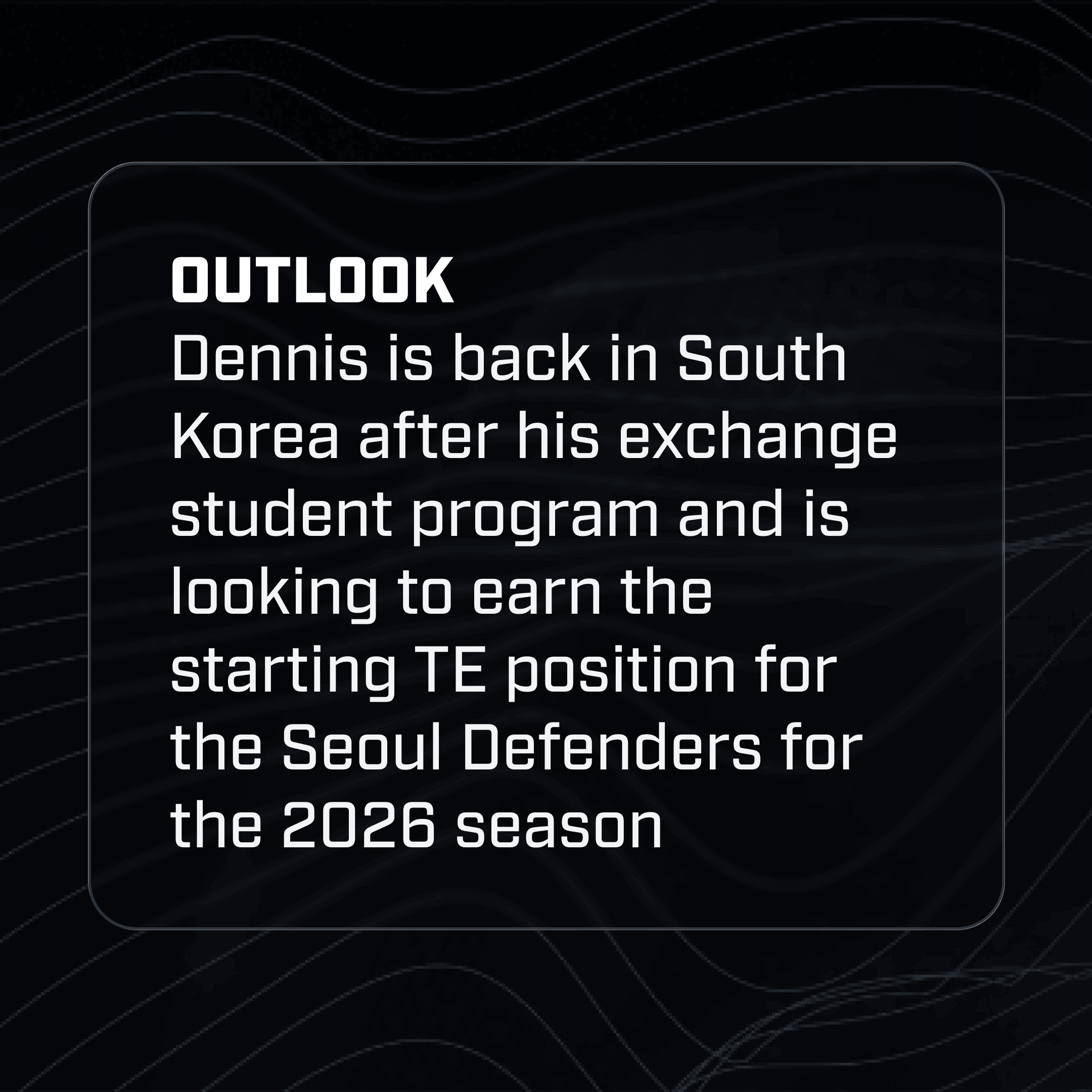
Throughout the first four months of using Peak Strength, Dennis was able to achieve impressive results. Even in just a matter of a few months, Dennis was able to see noticeable changes both in his physique and performance. As an athlete competing for a starting position in the KNFL, Dennis’ continued development in the focus areas of strength, explosiveness, and speed will be crucial for achieving his goals. Although the weight room numbers may not equate to skill on the field, following a structured training plan for his sport and position will give him the physical adaptations needed to be a true competitor.
FUTURE RECOMMENDATIONS
Speed Work: As a tight end, speed is a critical on-field asset. By prioritizing the speed workouts in the tight end training plan, Dennis will be able to turn his strength and explosiveness gains into direct speed.
Continued Explosive Development: Dennis mentioned that Peak Strength’s training plan was the first time he had consistently worked on cleans. This means there is a lot of room to refine and grow through dynamic movements.
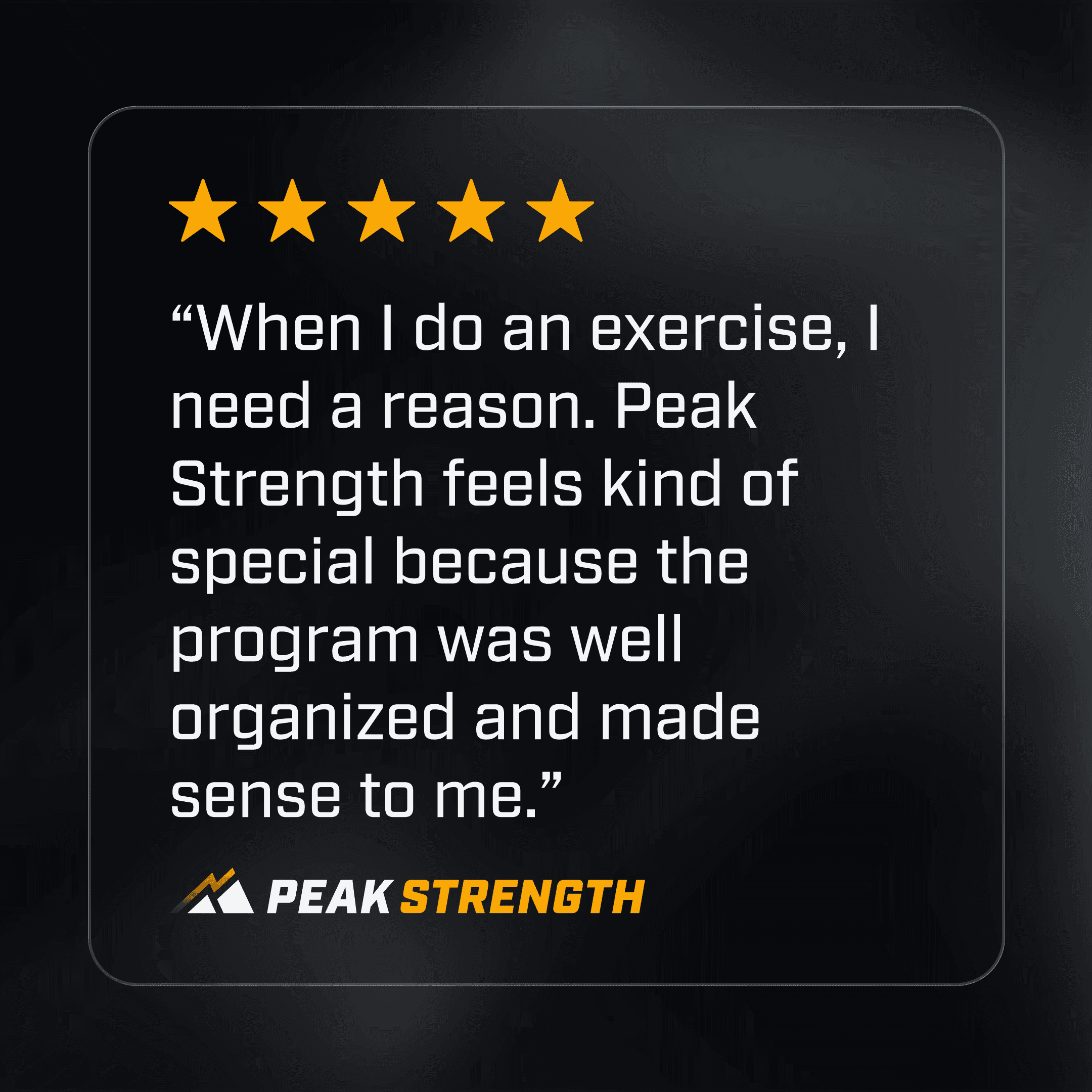
Maintaining Consistency: As Dennis prepares this offseason to earn the starting position on the Seoul Defenders, consistent strength and speed training should take a priority before training camp starts in the summer time.
Ivan Escott
Ivan is a national-level Olympic weightlifter and performance coach at Garage Strength Sports Performance.
Related Articles

Case Studies
Gold at U21 World Championship for Swedish Jujitsu Fighter
May 5, 2026 • 7 minutes

Case Studies
From 6th Grade to the NFL: How 11 Years of Strength Training Built a Kansas City Chief
Feb 19, 2026 • 6 minutes
.png&w=3840&q=75)
Case Studies
Peak Strength Helps 39-Year-Old Wrestler Become a World Champion
Jan 8, 2026 • 8 minutes